
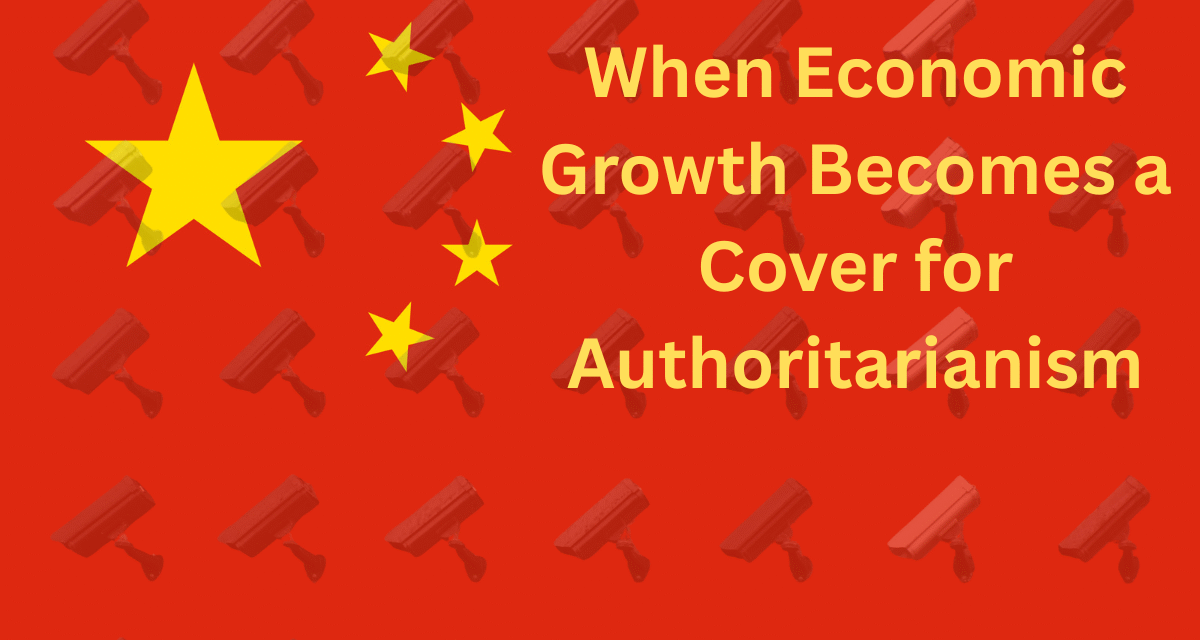
How Authoritarian Regimes Like China Define Progress While Violating Basic Human Rights
Authoritarian governments across the globe and in China in particular present a troubling paradox: they often tout impressive economic growth, technological advancement, and social stability while simultaneously suppressing fundamental human rights and freedoms. This contradiction raises critical questions about how we define progress and whether material advancement can justify the erosion of basic liberties.
The Authoritarian Progress Narrative in China
Authoritarian regimes frequently justify their restrictions on freedom by pointing to tangible achievements. They argue that rapid economic development, infrastructure improvements, and social order require centralised control and limited dissent. This narrative suggests that democracy and individual freedoms are luxuries that developing nations cannot afford, or that they represent Western values incompatible with local traditions and priorities.
China exemplifies this approach, having transformed from an impoverished nation into the world’s second-largest economy within decades. The Chinese government attributes this success to its ability to make long-term decisions without the gridlock of democratic debate, implement policies swiftly, and maintain social stability through controlled information flow.
The Reality of Restricted Freedoms
However, this progress comes at a significant cost to human rights and individual liberties. In China, freedom remains severely constrained across multiple dimensions:
Freedom of Speech and Expression
The Chinese state exercises extensive control over public discourse. Criticism of the government, Communist Party leadership, or sensitive historical events faces immediate censorship. The 1989 Tiananmen Square pro-democracy protests have been completely erased from public memory—textbooks omit the events, online searches return no results, and even subtle references like candle emojis are deleted from social media. Hong Kong’s annual vigil commemorating the protests was banned after China tightened control following the 2019 demonstrations.
Social media platforms employ sophisticated algorithms to detect and remove “problematic” content within minutes. When a high-speed train crash in 2011 killed dozens of passengers, criticism on platforms like WeChat was quickly scrubbed, and journalists were instructed not to investigate the incident deeply. Users risk punishment for sharing dissenting views or information that challenges official narratives.
Press Freedom and Information Control
Independent journalism has been virtually eliminated in China. State media dominates the information landscape, while foreign news outlets face restrictions and censorship. Journalists who attempt to report on sensitive topics risk harassment, detention, or imprisonment.
The case of Dr. Li Wenliang illustrates the deadly consequences of information control. In late 2019, this Wuhan doctor tried to warn colleagues about a “SARS-like” virus—what would become COVID-19. Instead of being praised for his vigilance, authorities silenced him and forced him to sign a statement admitting to spreading “rumors.” Dr. Li later died from COVID-19, sparking rare online anger that was quickly censored by authorities.
The Hong Kong crackdown further demonstrates press freedom restrictions. After the 2019 pro-democracy protests, China imposed the National Security Law in 2020. Pro-democracy activists like Joshua Wong and media owner Jimmy Lai were jailed, while critical newspapers like Apple Daily were shut down entirely for their coverage of Beijing’s policies.
Digital Rights and Internet Freedom in China
China’s “Great Firewall” represents one of the most comprehensive internet censorship systems globally. Major international platforms including Google, Facebook, YouTube, Twitter, and numerous foreign news websites remain blocked. Citizens must use Virtual Private Networks (VPNs) to access unrestricted information, though even VPN usage carries legal risks. The government requires real-name registration for online activities and employs advanced surveillance to monitor digital behavior.
Political Participation
China operates as a one-party state where the Communist Party maintains absolute control. Citizens cannot form opposition parties, participate in genuine electoral competition, or advocate for systemic political change. While local elections exist, candidates must be approved by the Party, and meaningful political alternatives remain unavailable.
Assembly and Association Rights in China
Public demonstrations require government approval and are strictly controlled. Unauthorized protests face immediate dispersal, with organizers risking detention or imprisonment. Independent labor unions, non-governmental organizations, and religious groups operate under severe restrictions. Many such organizations have been forced to close or operate under state supervision.
Religious Freedom Constraints
Religious practice is only permitted within state-approved organizations that operate under government oversight. Unofficial “house churches” (Christian congregations operating outside state control) are regularly raided, and their pastors face imprisonment for organizing unauthorized worship. In some regions, authorities have removed crosses from church buildings to reduce visible religious symbols.
In Xinjiang, Uyghur Muslims face particularly severe restrictions on worship, religious education, fasting during Ramadan, traditional dress, and use of their native language. Reports indicate that over one million Uyghurs have been detained in “re-education” facilities where they are forced to abandon religious practices, learn Communist Party ideology, and often subjected to physical and psychological abuse.
Movement and Privacy Restrictions
China’s hukou household registration system limits citizens’ ability to relocate within their own country, affecting access to education, healthcare, and employment opportunities. International travel can be particularly restricted for activists and dissidents. Human rights lawyer Teng Biao faced repeated harassment and was eventually forced to leave the country, while other activists have had their passports confiscated or been prevented from boarding international flights.
The government operates an extensive surveillance network including millions of facial recognition cameras, comprehensive online monitoring, and data collection through mandatory smartphone apps. In pilot regions, China has implemented a “social credit system” that assigns trustworthiness scores to citizens based on their behavior. Those with low scores—whether for unpaid debts, criticizing the government, or other infractions—can be banned from purchasing plane or train tickets, effectively restricting their freedom of movement.
The Cost of “Stability”
While authoritarian regimes may achieve certain forms of progress, they do so by suppressing the very freedoms that enable human flourishing. The absence of free press means corruption and policy failures remain hidden until they become crises. Without freedom of expression, societies cannot engage in the open debate necessary for addressing complex challenges. The lack of political competition removes accountability mechanisms that encourage responsive governance.
Moreover, progress achieved through authoritarian means often proves fragile. Economic development built on suppressed labor rights and environmental degradation creates unsustainable foundations. Social stability maintained through surveillance and coercion breeds resentment and instability beneath the surface.
How China seeks to redefine Progress
True progress must encompass not only material advancement but also the expansion of human dignity, freedom, and opportunity. A society that lifts people out of poverty while denying them basic rights has achieved only partial development. Sustainable progress requires institutions that protect individual liberties, enable peaceful dissent, and allow societies to adapt and evolve through open dialogue.
The challenge for the international community is to support models of development that combine economic advancement with respect for human rights. This means recognizing that democracy and freedom are not obstacles to progress but essential components of genuine human development.
Conclusion
While authoritarian regimes may point to impressive statistics on economic growth or infrastructure development, these achievements cannot justify the suppression of fundamental human rights. Progress that comes at the cost of freedom is ultimately hollow and unsustainable. As we evaluate different models of governance and development, we must insist that true progress includes the expansion of human liberty, dignity, and the right to participate meaningfully in shaping one’s society.
The question is not whether authoritarian systems can deliver certain forms of progress—they demonstrably can. The question is whether we will accept a definition of progress that excludes the very freedoms that make us human.







Recent Comments