
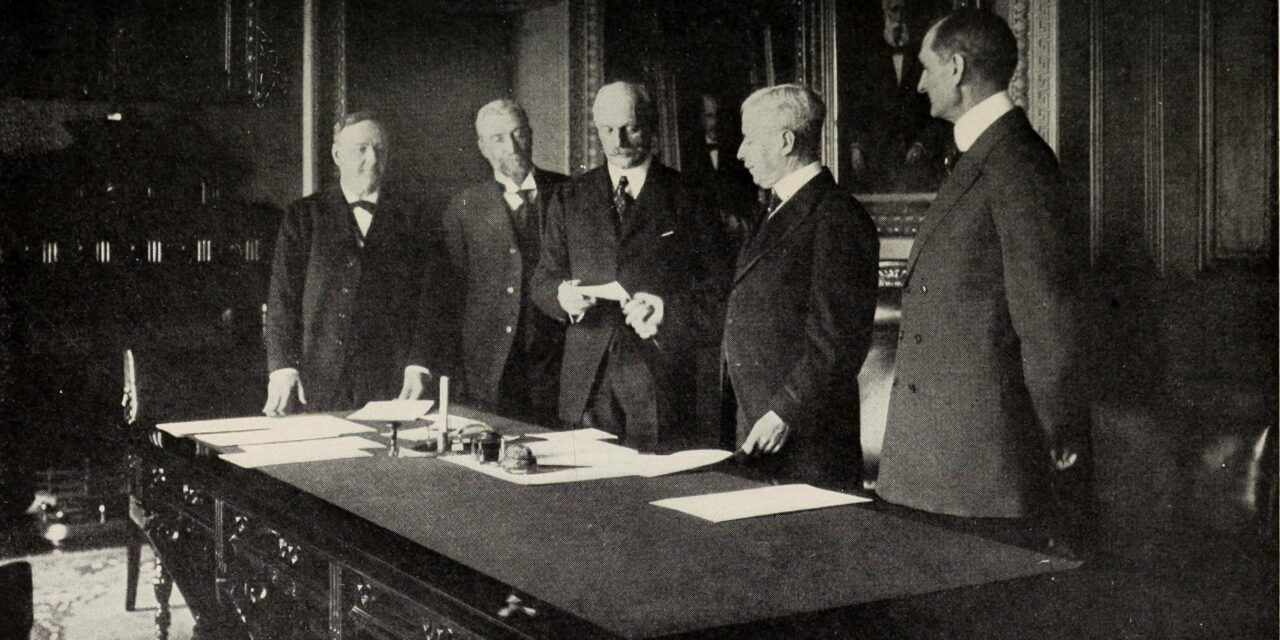
In 1916, Denmark made what looked like an improbable trade. It sold its Caribbean colonies—the Danish West Indies, today the U.S. Virgin Islands—to the United States. Officially, the deal was about money and wartime security. Strategically, however, it was about something far colder, farther north, and far more consequential: Greenland.
The United States paid $25 million in gold, but the real currency of the agreement was geopolitical recognition. Washington formally acknowledged Danish sovereignty over Greenland—a vast, icy territory that few Europeans cared about at the time, but which Denmark understood would one day matter. The Caribbean was expendable. Greenland was not.
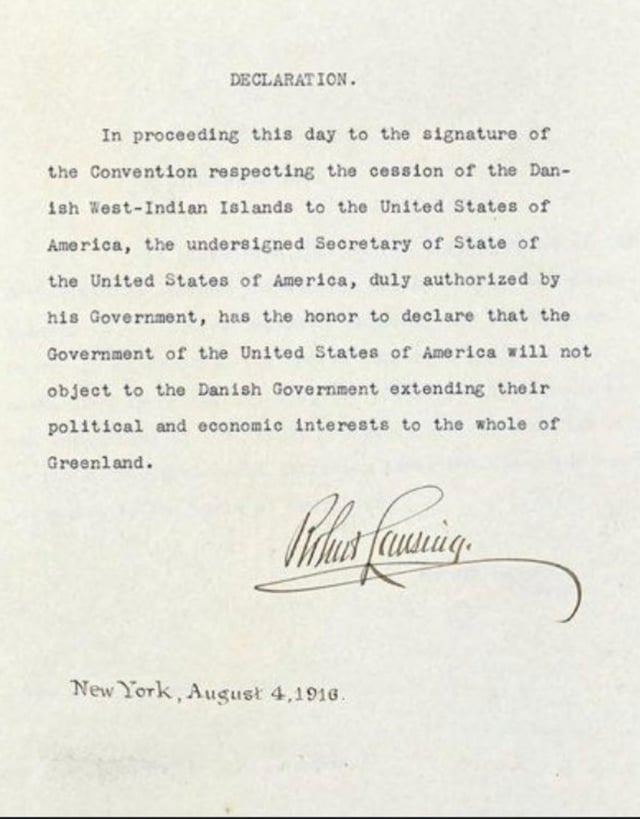
A century later, that quiet calculation has returned to haunt us.
Greenland is no longer a frozen backwater. Melting ice has transformed it into a strategic prize: rare earth minerals, new shipping routes, military positioning in the Arctic, and a front-row seat in the emerging great-power competition between the United States, China, and Russia. What Denmark secured through diplomacy in 1916 is now being challenged through blunt power politics.
Enter Donald Trump.
When Trump floated the idea of “buying Greenland,” the world laughed. Danish officials were incredulous. Commentators dismissed it as another provocation. But the joke missed the point. Trump was not inventing something new—he was reviving an old American instinct.
The United States has always thought in transactions. Louisiana was bought. Alaska was bought. The Danish West Indies were bought. From this perspective, Trump’s proposal was not insane; it was historically consistent. What was new was not the ambition, but the method: public, coercive, and dismissive of diplomatic norms.
Where 1916 was subtle statecraft, Trumpism is megaphone geopolitics.
The danger is not Trump alone, but what Trumpism normalizes. Greenland is increasingly framed not as a society or a partner, but as an asset. A mineral reserve. A military platform. A square on a geopolitical board.
This creates a headache not only for Denmark, but for Europe.
Denmark’s sovereignty over Greenland rests on treaties, recognition, and international law—precisely the foundations that transactional geopolitics treats as optional. In a world where power is measured less by rules and more by leverage, history becomes negotiable and sovereignty conditional.

This is where the Louisiana question matters.
Could France claim Louisiana back? Of course not. The 1803 sale was final, legal, and internationally recognized. No serious strategist would entertain the idea. And yet that same logic must apply to Greenland. If historical sales are irreversible, then so is the sovereignty they protect.
The analogy exposes the flaw in transactional thinking: treating territory as permanently for sale undermines the entire international order.
Which brings us to the European strategic dilemma.
Greenland is not a member of the European Union. It left the European Economic Community in 1985. That fact is often used as an excuse for European passivity. It should be the opposite.
Greenland may be outside the EU’s legal borders, but it is not outside Europe’s strategic reality.
An attack on Danish sovereignty in Greenland is an attack on a European state. A challenge to Arctic governance is a challenge to Europe’s northern flank. And a precedent that allows powerful allies to pressure small states over territory will not stop at the ice.
The European Union cannot hide behind legal technicalities while the geopolitical ground shifts beneath it.
If the EU wants treaties, borders, and sovereignty to mean something in the 21st century, it must act—even when the territory in question is formally outside the Union. That means political backing for Denmark, strategic engagement in Arctic governance, investment in European presence in the High North, and a clear message: European sovereignty is not negotiable, even by friends.
This is not about opposing the United States. It is about opposing the idea that power replaces law.
In 1916, Denmark understood that geography is destiny and that patience can outlast force. It traded sugar for ice and secured Greenland through foresight rather than confrontation.
But 2026 is not 1916.
Today’s geopolitics rewards audacity over restraint, disruption over continuity. Trump may or may not return to office, but the worldview he represents is already reshaping the rules of the game.
The irony is sharp: Denmark once sold land to secure Greenland from American ambition. Now Greenland is valuable precisely because that ambition has returned—louder, faster, and less restrained.
History does not repeat itself—but it does echo.
And in the Arctic, those echoes are getting louder.







Recent Comments